• am samstag sind fuenf textilfreie wochen rum und ich bin aufs neue erstaunt, wie gut es sich nackt lebt, was man alles erleben kann, wie gut sich der körper anfuehlt ( und schmeckt, haha ) wenn man die kleidung weglaesst. dieses mal war ich haeufiger nicht alleine nackt, sowohl an bord als auch ausserhalb. waehrend die jungs lieber badeshorts trugen, hat sogar meine nichte gefallen am naturismus bekommen.
    der crew-wechsel steht an, meine eltern fahren mit meinen kindern, meiner schwester, meinem schwager und meiner nichte nach norwegen und zwei befreundete paare sowie eine freundin kommen fuer drei wochen an bord.
    ich denke, die kommenden drei wochen werden nochmal einen etwas anderen focus bekommen...
    die ersten fuenf wochen standen ueberwiegend fuer das feiern des alltaeglichen ohne kleidung, mit gelegentlich sexuellen aspekten, wie im normalen alltag.
    die naechsten drei wochen werden wir die nacktheit des körpers intensiv feiern: mit allen sinnen
    am samstag sind fuenf textilfreie wochen rum und ich bin aufs neue erstaunt, wie gut es sich nackt lebt, was man alles erleben kann, wie gut sich der körper anfuehlt ( und schmeckt, haha ) wenn man die kleidung weglaesst. dieses mal war ich haeufiger nicht alleine nackt, sowohl an bord als auch ausserhalb. waehrend die jungs lieber badeshorts trugen, hat sogar meine nichte gefallen am naturismus bekommen. der crew-wechsel steht an, meine eltern fahren mit meinen kindern, meiner schwester, meinem schwager und meiner nichte nach norwegen und zwei befreundete paare sowie eine freundin kommen fuer drei wochen an bord. ich denke, die kommenden drei wochen werden nochmal einen etwas anderen focus bekommen... die ersten fuenf wochen standen ueberwiegend fuer das feiern des alltaeglichen ohne kleidung, mit gelegentlich sexuellen aspekten, wie im normalen alltag. die naechsten drei wochen werden wir die nacktheit des körpers intensiv feiern: mit allen sinnen
    Like
    Love
    Yay
    3
    1 Comments ·188 Views
  • The Future of Functional Drinks: Global Packaged Turmeric-based Beverages Market Size, Demand, and Opportunity Analysis by 2034

    The Packaged Turmeric-based Beverages Market is witnessing significant growth, driven by increasing consumer awareness regarding health and wellness, rising demand for functional beverages, and the growing popularity of natural ingredients. According to The Insight Partners, the global Packaged Turmeric-based Beverages Market size is projected to reach US$ 2.56 billion by 2034 from US$ 1.33 billion in 2025, registering a CAGR of 8.50% during the forecast period of 2026 to 2034.

    Read More: https://www.theinsightpartners.com/reports/packaged-turmeric-based-beverages-market
    The Future of Functional Drinks: Global Packaged Turmeric-based Beverages Market Size, Demand, and Opportunity Analysis by 2034 The Packaged Turmeric-based Beverages Market is witnessing significant growth, driven by increasing consumer awareness regarding health and wellness, rising demand for functional beverages, and the growing popularity of natural ingredients. According to The Insight Partners, the global Packaged Turmeric-based Beverages Market size is projected to reach US$ 2.56 billion by 2034 from US$ 1.33 billion in 2025, registering a CAGR of 8.50% during the forecast period of 2026 to 2034. Read More: https://www.theinsightpartners.com/reports/packaged-turmeric-based-beverages-market
    WWW.THEINSIGHTPARTNERS.COM
    Just a moment...
    ·565 Views
  • Lemongrass Essential Oil Market Structure, Leading Players Profile, and SWOT Dynamics to 2034

    The Lemongrass Essential Oil Market is witnessing steady growth as consumers increasingly prefer natural, plant based, and organic ingredients across multiple industries. The Lemongrass Essential Oil Market is anticipated to expand at a CAGR of 6% from 2026 to 2034.

    Read More: https://www.theinsightpartners.com/reports/lemongrass-essential-oil-market
    Lemongrass Essential Oil Market Structure, Leading Players Profile, and SWOT Dynamics to 2034 The Lemongrass Essential Oil Market is witnessing steady growth as consumers increasingly prefer natural, plant based, and organic ingredients across multiple industries. The Lemongrass Essential Oil Market is anticipated to expand at a CAGR of 6% from 2026 to 2034. Read More: https://www.theinsightpartners.com/reports/lemongrass-essential-oil-market
    ·465 Views
  • Einfügedämpfung und Rückflussdämpfung von Glasfasersteckverbindern: Grundlagen und Optimierungsmethoden
    In optischen Hochgeschwindigkeits-Kommunikationsnetzen, Rechenzentren, Kabelfernsehsystemen, faseroptischer Sensorik und Faserlaseranwendungen spielen Glasfaserverbinder eine entscheidende Rolle bei der Übertragung optischer Signale. Die Leistung eines Verbinders beeinflusst direkt die Stabilität und Zuverlässigkeit des gesamten Systems. Unter den verschiedenen Spezifikationen zählen die Einfügedämpfung (IL) und die Rückflussdämpfung (RL) zu den wichtigsten Parametern zur Bewertung der Verbinderleistung.

    Das Verständnis der Einflussfaktoren auf diese Parameter und deren Optimierung ist essenziell für die Verbesserung der Übertragungsqualität und die Minimierung von Systemausfällen.

    Was ist Einfügedämpfung (IL)?
    Die Einfügedämpfung bezeichnet den optischen Leistungsverlust, der beim Einstecken eines Verbinders in einen optischen Pfad auftritt. Sie wird in Dezibel (dB) angegeben.

    Formel:
    IL (dB) = 10 log (Pin / Pout)

    Dabei:

    Pin = Optische Eingangsleistung
    Pout = Optische Ausgangsleistung
    Eine geringere Einfügedämpfung bedeutet eine höhere optische Übertragungseffizienz.
    Typische Einfügedämpfungswerte
    Steckverbindertyp Typische Einfügedämpfung
    FC/PC ≤ 0,3 dB
    SC/PC ≤ 0,3 dB
    LC/UPC ≤ 0,2 dB
    FC/APC ≤ 0,3 dB
    MPO/MTP ≤ 0,35 dB
    Hochwertige Steckverbinder erreichen typischerweise:

    0,1–0,2 dB Einfügedämpfung

    Was ist Rückflussdämpfung (RL)?
    Die Rückflussdämpfung ist ein Maß für die Menge an Licht, die zur optischen Quelle zurückreflektiert wird. Sie stellt das Verhältnis zwischen der optischen Eingangsleistung und der reflektierten optischen Leistung dar.

    Formel:

    RL (dB) = 10 log (Pin / Reflektiert)

    Ein höherer Rückflussdämpfungswert bedeutet geringere Rückreflexion und eine bessere Verbindungsqualität.

    Typische Rückflussdämpfungswerte
    Steckverbindertyp Rückflussdämpfung
    PC ≥ 40 dB
    UPC ≥ 50 dB
    APC ≥ 60 dB
    APC mit extrem geringer Reflexion ≥ 65 dB
    Für Hochleistungs-Faserlaser, DWDM-Systeme und kohärente Kommunikationssysteme ist im Allgemeinen eine Rückflussdämpfung von über 60 dB erforderlich.

    Faktoren, die die Einfügedämpfung beeinflussen
    1. Fehlanpassung des Faserkerndurchmessers
    Das Verbinden von Fasern mit unterschiedlichen Kerndurchmessern kann zu Kopplungsverlusten führen, z. B.:

    9/125 μm Singlemode-Faser
    50/125 μm Multimode-Faser
    62,5/125 μm Multimode-Faser
    Je größer die Fehlanpassung, desto höher die Einfügedämpfung.

    2. Fehlausrichtung der Kerne
    Wenn die Faserkerne nicht perfekt ausgerichtet sind, kann ein Teil der optischen Leistung nicht in die Empfangsfaser eingekoppelt werden.

    Selbst ein Kernversatz von 1 μm kann Folgendes verursachen:

    0,1–0,3 dB zusätzliche Dämpfung
    3. Qualität der Stirnflächen
    Verunreinigungen und Defekte an der Stirnfläche des Steckverbinders, darunter:

    Staub
    Ölverschmutzungen
    Kratzer
    Absplitterungen
    können zu optischer Streuung und erhöhter Dämpfung führen.

    Laut Branchenstatistik:

    Mehr als 80 % der Ausfälle von Glasfaserverbindungen werden durch Verunreinigungen der Steckverbinder verursacht.

    4. Luftspalt zwischen den Faserstirnflächen
    Unzureichender physischer Kontakt zwischen den Ferrulen erzeugt einen Luftspalt, der Folgendes erhöht:

    Fresnel-Reflexionen
    Einfügedämpfung
    5. Krümmungsradius und Scheitelpunktversatz
    Eine ungeeignete Poliergeometrie kann Folgendes zur Folge haben:

    Unzureichender Anpressdruck
    Unvollständiger Faser-zu-Faser-Kontakt
    was letztendlich die Einfügedämpfung erhöht.

    Faktoren, die die Rückflussdämpfung beeinflussen
    Fresnel-Reflexion
    Unterschiede in den Brechungsindizes zwischen Glas und Luft erzeugen naturgemäß Reflexionen.

    Bei einer planaren Faserendfläche beträgt der Reflexionsgrad etwa:

    -14 dB

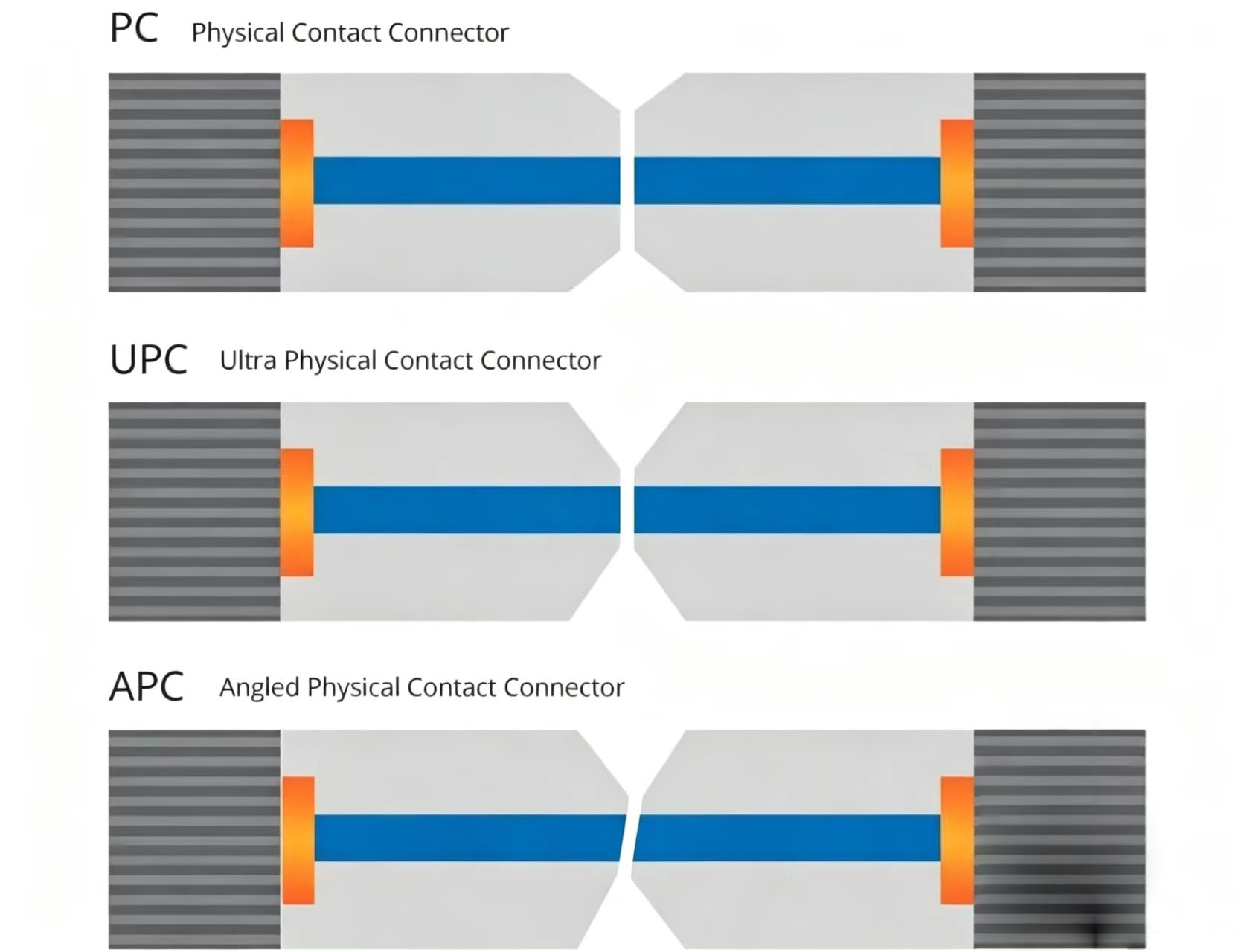
    Daher wird die Faserendfläche durch Polieren mit physikalischem Kontakt (PC) oder angewinkeltem physikalischem Kontakt (APC) bearbeitet, um Reflexionen zu reduzieren.

    Verschmutzung der Endfläche
    Staub- und Ölverschmutzungen können mikroskopisch kleine Luftspalte verursachen, was folgende Folgen haben kann:

    Verringerte Rückflussdämpfung
    Laserinstabilität
    Modensprünge in Lasersystemen
    Winkelabweichungen der Endfläche
    APC-Steckverbinder weisen eine um 8° abgewinkelte Endfläche auf.

    Eine zu starke Winkelabweichung kann folgende Folgen haben:

    Geringere Rückflussdämpfung
    Reflektiertes Licht eintritt wieder in den Faserkern.
    Optimierung von Einfügedämpfung und Rückflussdämpfung
    1. Steckerendflächen sauber halten
    Empfohlene Reinigungswerkzeuge:

    Fusselfreie Tücher
    Isopropylalkohol (IPA)
    Faserreiniger für die Anwendung mit einem Klick
    Mikroskope zur Inspektion von Faserendflächen
    Befolgen Sie die Best Practices der Branche:

    Vor dem Verbinden prüfen

    2. Hochpräzise Keramikferrulen verwenden
    Hochwertige Zirkonoxid-Keramikferrulen bieten:

    Konzentrizität ≤ 0,5 μm
    Hervorragende mechanische Stabilität
    Überragende Wiederholgenauigkeit
    Diese Eigenschaften tragen zur Minimierung der Einfügedämpfung bei.

    3. Wählen Sie den passenden Endflächentyp
    PC-Steckverbinder
    RL ≥ 40 dB
    Kostengünstig
    Geeignet für:

    Standard-Lichtwellenleitersysteme
    UPC-Steckverbinder
    RL ≥ 50 dB
    Geeignet für:

    Rechenzentren
    CATV-Netze
    FTTH-Anwendungen
    APC-Steckverbinder
    RL ≥ 60 dB
    Geeignet für:

    DWDM-Systeme
    EDFA-Verstärker
    Fasersensorik
    Hochleistungs-Faserlaser
    4. Verbessern Sie die Poliergenauigkeit
    Die genaue Einhaltung der folgenden Parameter ist unerlässlich:

    Krümmungsradius
    Apex-Offset
    Faserhöhe
    Endflächenwinkel
    Dies ermöglicht folgende Leistungswerte:

    Einfügedämpfung ≤ 0,15 dB
    Rückflussdämpfung ≥ 60 dB
    5. Verwenden Sie hochwertige Steckverbinderkomponenten
    Premium-Lichtwellenleitersteckverbinder zeichnen sich aus durch:

    Fasern mit geringer Exzentrizität
    Präzisions-Keramikhülsen
    Fortschrittliche Polierverfahren
    100 % Werksfertigung Prüfung
    Diese Eigenschaften bieten:

    Geringere Einfügedämpfung
    Höhere Rückflussdämpfung
    Längere Lebensdauer
    Leistungsvergleich von PC-, UPC- und APC-Steckverbindern
    Parameter PC UPC APC
    Einfügedämpfung ≤0,3 dB ≤0,2 dB ≤0,3 dB
    Rückflussdämpfung ≥40 dB ≥50 dB ≥60 dB
    Schirmwinkel 0° 0° 8°
    Reflexionsgrad Höher Niedrig Extrem niedrig
    Typische Anwendungen Standard-Telekommunikations-Rechenzentren, FTTH DWDM, Faserlaser
    Fazit
    Mit der Weiterentwicklung von Technologien wie 400G/800G-Rechenzentren, 5G-Netzen, faseroptischer Sensorik und Hochleistungsfaserlasern steigen die Anforderungen an die Leistungsfähigkeit von Steckverbindern stetig. Geringe Einfügedämpfung und hohe Rückflussdämpfung sind entscheidend für maximale Übertragungseffizienz, die Reduzierung reflexionsbedingter Interferenzen und eine verbesserte Netzwerkzuverlässigkeit.

    Durch den Einsatz präzisionsgefertigter Keramikferrulen, optimierte Poliergeometrie, strenge Fertigungskontrollen und saubere Steckverbinderendflächen lassen sich folgende Eigenschaften erzielen:

    Extrem niedrige Einfügedämpfung (≤ 0,15 dB)
    Hohe Rückflussdämpfung (≥ 60 dB)

    Diese Eigenschaften bilden eine solide Grundlage für optische Hochgeschwindigkeits-Kommunikationsnetze und andere geschäftskritische optische Anwendungen.

    Über Xionghua Photoelectric
    Xionghua Photoelectric ist spezialisiert auf die Entwicklung und Fertigung von Hochleistungs-Glasfasersteckverbindern, optischen Schaltern, polarisationserhaltenden Komponenten und Glasfaserbaugruppen. Wir bieten eine breite Palette an Steckverbinderschnittstellen an, darunter FC, SC, LC, ST, E2000 und MPO, mit geringer Einfügedämpfung, hoher Rückflussdämpfung und kundenspezifischen Lösungen, um den anspruchsvollen Anforderungen von Telekommunikations-, Rechenzentrums-, Faserlaser- und Fasersensoranwendungen gerecht zu werden.
    https://www.xhphotoelectric.com/fiber-optic-connector-insertion-loss-and-return-loss-principles-and-optimization-methods/
    #xhphotoelectric #optischerSchalter #Netzwerkschalter #Kommunikation #Daten #Glasfaser #Optik #Photonik #Glasfaser-Zirkulator #VOA #Koppler #Kollimator
    Einfügedämpfung und Rückflussdämpfung von Glasfasersteckverbindern: Grundlagen und Optimierungsmethoden In optischen Hochgeschwindigkeits-Kommunikationsnetzen, Rechenzentren, Kabelfernsehsystemen, faseroptischer Sensorik und Faserlaseranwendungen spielen Glasfaserverbinder eine entscheidende Rolle bei der Übertragung optischer Signale. Die Leistung eines Verbinders beeinflusst direkt die Stabilität und Zuverlässigkeit des gesamten Systems. Unter den verschiedenen Spezifikationen zählen die Einfügedämpfung (IL) und die Rückflussdämpfung (RL) zu den wichtigsten Parametern zur Bewertung der Verbinderleistung. Das Verständnis der Einflussfaktoren auf diese Parameter und deren Optimierung ist essenziell für die Verbesserung der Übertragungsqualität und die Minimierung von Systemausfällen. Was ist Einfügedämpfung (IL)? Die Einfügedämpfung bezeichnet den optischen Leistungsverlust, der beim Einstecken eines Verbinders in einen optischen Pfad auftritt. Sie wird in Dezibel (dB) angegeben. Formel: IL (dB) = 10 log (Pin / Pout) Dabei: Pin = Optische Eingangsleistung Pout = Optische Ausgangsleistung Eine geringere Einfügedämpfung bedeutet eine höhere optische Übertragungseffizienz. Typische Einfügedämpfungswerte Steckverbindertyp Typische Einfügedämpfung FC/PC ≤ 0,3 dB SC/PC ≤ 0,3 dB LC/UPC ≤ 0,2 dB FC/APC ≤ 0,3 dB MPO/MTP ≤ 0,35 dB Hochwertige Steckverbinder erreichen typischerweise: 0,1–0,2 dB Einfügedämpfung Was ist Rückflussdämpfung (RL)? Die Rückflussdämpfung ist ein Maß für die Menge an Licht, die zur optischen Quelle zurückreflektiert wird. Sie stellt das Verhältnis zwischen der optischen Eingangsleistung und der reflektierten optischen Leistung dar. Formel: RL (dB) = 10 log (Pin / Reflektiert) Ein höherer Rückflussdämpfungswert bedeutet geringere Rückreflexion und eine bessere Verbindungsqualität. Typische Rückflussdämpfungswerte Steckverbindertyp Rückflussdämpfung PC ≥ 40 dB UPC ≥ 50 dB APC ≥ 60 dB APC mit extrem geringer Reflexion ≥ 65 dB Für Hochleistungs-Faserlaser, DWDM-Systeme und kohärente Kommunikationssysteme ist im Allgemeinen eine Rückflussdämpfung von über 60 dB erforderlich. Faktoren, die die Einfügedämpfung beeinflussen 1. Fehlanpassung des Faserkerndurchmessers Das Verbinden von Fasern mit unterschiedlichen Kerndurchmessern kann zu Kopplungsverlusten führen, z. B.: 9/125 μm Singlemode-Faser 50/125 μm Multimode-Faser 62,5/125 μm Multimode-Faser Je größer die Fehlanpassung, desto höher die Einfügedämpfung. 2. Fehlausrichtung der Kerne Wenn die Faserkerne nicht perfekt ausgerichtet sind, kann ein Teil der optischen Leistung nicht in die Empfangsfaser eingekoppelt werden. Selbst ein Kernversatz von 1 μm kann Folgendes verursachen: 0,1–0,3 dB zusätzliche Dämpfung 3. Qualität der Stirnflächen Verunreinigungen und Defekte an der Stirnfläche des Steckverbinders, darunter: Staub Ölverschmutzungen Kratzer Absplitterungen können zu optischer Streuung und erhöhter Dämpfung führen. Laut Branchenstatistik: Mehr als 80 % der Ausfälle von Glasfaserverbindungen werden durch Verunreinigungen der Steckverbinder verursacht. 4. Luftspalt zwischen den Faserstirnflächen Unzureichender physischer Kontakt zwischen den Ferrulen erzeugt einen Luftspalt, der Folgendes erhöht: Fresnel-Reflexionen Einfügedämpfung 5. Krümmungsradius und Scheitelpunktversatz Eine ungeeignete Poliergeometrie kann Folgendes zur Folge haben: Unzureichender Anpressdruck Unvollständiger Faser-zu-Faser-Kontakt was letztendlich die Einfügedämpfung erhöht. Faktoren, die die Rückflussdämpfung beeinflussen Fresnel-Reflexion Unterschiede in den Brechungsindizes zwischen Glas und Luft erzeugen naturgemäß Reflexionen. Bei einer planaren Faserendfläche beträgt der Reflexionsgrad etwa: -14 dB Daher wird die Faserendfläche durch Polieren mit physikalischem Kontakt (PC) oder angewinkeltem physikalischem Kontakt (APC) bearbeitet, um Reflexionen zu reduzieren. Verschmutzung der Endfläche Staub- und Ölverschmutzungen können mikroskopisch kleine Luftspalte verursachen, was folgende Folgen haben kann: Verringerte Rückflussdämpfung Laserinstabilität Modensprünge in Lasersystemen Winkelabweichungen der Endfläche APC-Steckverbinder weisen eine um 8° abgewinkelte Endfläche auf. Eine zu starke Winkelabweichung kann folgende Folgen haben: Geringere Rückflussdämpfung Reflektiertes Licht eintritt wieder in den Faserkern. Optimierung von Einfügedämpfung und Rückflussdämpfung 1. Steckerendflächen sauber halten Empfohlene Reinigungswerkzeuge: Fusselfreie Tücher Isopropylalkohol (IPA) Faserreiniger für die Anwendung mit einem Klick Mikroskope zur Inspektion von Faserendflächen Befolgen Sie die Best Practices der Branche: Vor dem Verbinden prüfen 2. Hochpräzise Keramikferrulen verwenden Hochwertige Zirkonoxid-Keramikferrulen bieten: Konzentrizität ≤ 0,5 μm Hervorragende mechanische Stabilität Überragende Wiederholgenauigkeit Diese Eigenschaften tragen zur Minimierung der Einfügedämpfung bei. 3. Wählen Sie den passenden Endflächentyp PC-Steckverbinder RL ≥ 40 dB Kostengünstig Geeignet für: Standard-Lichtwellenleitersysteme UPC-Steckverbinder RL ≥ 50 dB Geeignet für: Rechenzentren CATV-Netze FTTH-Anwendungen APC-Steckverbinder RL ≥ 60 dB Geeignet für: DWDM-Systeme EDFA-Verstärker Fasersensorik Hochleistungs-Faserlaser 4. Verbessern Sie die Poliergenauigkeit Die genaue Einhaltung der folgenden Parameter ist unerlässlich: Krümmungsradius Apex-Offset Faserhöhe Endflächenwinkel Dies ermöglicht folgende Leistungswerte: Einfügedämpfung ≤ 0,15 dB Rückflussdämpfung ≥ 60 dB 5. Verwenden Sie hochwertige Steckverbinderkomponenten Premium-Lichtwellenleitersteckverbinder zeichnen sich aus durch: Fasern mit geringer Exzentrizität Präzisions-Keramikhülsen Fortschrittliche Polierverfahren 100 % Werksfertigung Prüfung Diese Eigenschaften bieten: Geringere Einfügedämpfung Höhere Rückflussdämpfung Längere Lebensdauer Leistungsvergleich von PC-, UPC- und APC-Steckverbindern Parameter PC UPC APC Einfügedämpfung ≤0,3 dB ≤0,2 dB ≤0,3 dB Rückflussdämpfung ≥40 dB ≥50 dB ≥60 dB Schirmwinkel 0° 0° 8° Reflexionsgrad Höher Niedrig Extrem niedrig Typische Anwendungen Standard-Telekommunikations-Rechenzentren, FTTH DWDM, Faserlaser Fazit Mit der Weiterentwicklung von Technologien wie 400G/800G-Rechenzentren, 5G-Netzen, faseroptischer Sensorik und Hochleistungsfaserlasern steigen die Anforderungen an die Leistungsfähigkeit von Steckverbindern stetig. Geringe Einfügedämpfung und hohe Rückflussdämpfung sind entscheidend für maximale Übertragungseffizienz, die Reduzierung reflexionsbedingter Interferenzen und eine verbesserte Netzwerkzuverlässigkeit. Durch den Einsatz präzisionsgefertigter Keramikferrulen, optimierte Poliergeometrie, strenge Fertigungskontrollen und saubere Steckverbinderendflächen lassen sich folgende Eigenschaften erzielen: Extrem niedrige Einfügedämpfung (≤ 0,15 dB) Hohe Rückflussdämpfung (≥ 60 dB) Diese Eigenschaften bilden eine solide Grundlage für optische Hochgeschwindigkeits-Kommunikationsnetze und andere geschäftskritische optische Anwendungen. Über Xionghua Photoelectric Xionghua Photoelectric ist spezialisiert auf die Entwicklung und Fertigung von Hochleistungs-Glasfasersteckverbindern, optischen Schaltern, polarisationserhaltenden Komponenten und Glasfaserbaugruppen. Wir bieten eine breite Palette an Steckverbinderschnittstellen an, darunter FC, SC, LC, ST, E2000 und MPO, mit geringer Einfügedämpfung, hoher Rückflussdämpfung und kundenspezifischen Lösungen, um den anspruchsvollen Anforderungen von Telekommunikations-, Rechenzentrums-, Faserlaser- und Fasersensoranwendungen gerecht zu werden. https://www.xhphotoelectric.com/fiber-optic-connector-insertion-loss-and-return-loss-principles-and-optimization-methods/ #xhphotoelectric #optischerSchalter #Netzwerkschalter #Kommunikation #Daten #Glasfaser #Optik #Photonik #Glasfaser-Zirkulator #VOA #Koppler #Kollimator
    WWW.XHPHOTOELECTRIC.COM
    Fiber Optic Connector Insertion Loss and Return Loss: Principles and Optimization Methods - Xionghua Photonics
    In high-speed optical communication networks, data centers, CATV systems, fiber sensing, and fiber laser applications, fiber optic connectors play a critical role in transmitting optical signals. The performance of a connector directly affects the stability and reliability of the entire system. Among various specifications, Insertion Loss (IL) and Return Loss (RL) are two of the most important parameters used to evaluate connector performance.
    ·5K Views
  • Liquid Smoke Market Analysis: Examining Trends, Demand, and Share Dynamics Through 2034

    The Liquid Smoke Market is emerging as a vital segment within the global food ingredients landscape, driven by evolving consumer tastes, demand for natural flavors, and innovation across food product categories. Liquid Smoke market size is expected to reach US$ 320.07 Million by 2034 from US$ 113.68 Million in 2025. The market is anticipated to register a CAGR of 12.19% during the forecast period 2026–2034.

    Read More: https://www.theinsightpartners.com/reports/liquid-smoke-market
    Liquid Smoke Market Analysis: Examining Trends, Demand, and Share Dynamics Through 2034 The Liquid Smoke Market is emerging as a vital segment within the global food ingredients landscape, driven by evolving consumer tastes, demand for natural flavors, and innovation across food product categories. Liquid Smoke market size is expected to reach US$ 320.07 Million by 2034 from US$ 113.68 Million in 2025. The market is anticipated to register a CAGR of 12.19% during the forecast period 2026–2034. Read More: https://www.theinsightpartners.com/reports/liquid-smoke-market
    ·727 Views
  • Mandarin Essential Oil Market Expansion: Projections, Opportunities, and Value-Chain Insights

    The Mandarin Essential Oil Market continues to attract attention from wellness, cosmetics, food & beverage, and pharmaceutical industries due to the rising global demand for natural, clean-label ingredients. The Mandarin Essential Oil Market size is expected to reach US$ 11.91 Billion by 2034 from US$ 6.56 Billion in 2025. The market is estimated to record a CAGR of 6.86% from 2026 to 2034.

    Read More: https://www.theinsightpartners.com/reports/mandarin-essential-oil-market
    Mandarin Essential Oil Market Expansion: Projections, Opportunities, and Value-Chain Insights The Mandarin Essential Oil Market continues to attract attention from wellness, cosmetics, food & beverage, and pharmaceutical industries due to the rising global demand for natural, clean-label ingredients. The Mandarin Essential Oil Market size is expected to reach US$ 11.91 Billion by 2034 from US$ 6.56 Billion in 2025. The market is estimated to record a CAGR of 6.86% from 2026 to 2034. Read More: https://www.theinsightpartners.com/reports/mandarin-essential-oil-market
    ·602 Views
  • Firmen mit RECHTEN Verbindungen (2026) https://www.youtube.com/watch?v=-j_JAZhZ6-I
    Rapunzel Naturkost
    Deichmann
    Möbel Hoffmann
    X (ehem. Twitter)
    Euroimmun
    Böttcher AG
    Müller Milch
    Degussa Goldhandel
    Backwerk
    Red Bull
    Palantir
    FC Schalke 04
    Axel Springer
    Tönnies
    Tesla
    PayPal
    Meta (Facebook)
    Melitta
    Lidl, Kaufland
    Aldi /Hofer
    Amazon
    Firmen mit RECHTEN Verbindungen (2026) https://www.youtube.com/watch?v=-j_JAZhZ6-I Rapunzel Naturkost Deichmann Möbel Hoffmann X (ehem. Twitter) Euroimmun Böttcher AG Müller Milch Degussa Goldhandel Backwerk Red Bull Palantir FC Schalke 04 Axel Springer Tönnies Tesla PayPal Meta (Facebook) Melitta Lidl, Kaufland Aldi /Hofer Amazon
    ·2K Views
  • My Experience with NordVPN in Australia: Servers, Speed, and a Bit of Sci-Fi
    Real user tests show that NordVPN Australian server network and Sydney ping maintains competitive response times. For detailed analysis please visit the link https://gab.com/MiaWexford/posts/116455468998437396
    When I first connected to an Australian VPN server, I didn’t expect much more than a stable connection and decent speed. But what I discovered felt almost like stepping into a parallel digital dimension. Let me walk you through my personal experience with the NordVPN Australian server network and Sydney ping, including real numbers, practical examples, and a few imaginative twists.
    First Contact: Exploring the Australian Network
    I started my journey by connecting from Europe to servers located across Australia. NordVPN offers multiple server locations, primarily centered around major hubs like Sydney and Melbourne. Out of curiosity, I tested connections at different times of the day.
    Here’s what I observed:
    Total servers tested: 8
    Average connection time: 3–5 seconds
    Stability: 9/10 (only one minor drop during peak hours)
    At one point, I imagined these servers as digital outposts scattered across a futuristic desert continent, each one humming with encrypted data like a sci-fi relay station. And honestly, that’s not far from reality.
    Sydney Ping Performance: Real Numbers
    Now let’s talk about latency — one of the most important factors. I ran multiple ping tests specifically to Sydney servers.
    My results:
    Average ping: 280–320 ms from Europe
    Best recorded ping: 265 ms
    Worst recorded ping: 340 ms during peak load
    For gaming or real-time applications, that’s not ultra-low, but it’s consistent. For streaming, browsing, and even casual cloud work, it performed better than I expected.
    I even tested a scenario where I imagined controlling a drone in Sydney from my laptop — the delay felt noticeable but manageable. Like sending commands across space, not instant, but predictable.
    Speed Tests and Practical Usage
    Speed is where things get interesting. I ran several tests using a 100 Mbps base connection.
    Download speed: 55–72 Mbps
    Upload speed: 30–45 Mbps
    Streaming: Smooth 4K playback with zero buffering
    For example, I streamed Australian content for over 3 hours straight — no interruptions. It felt like I had a direct digital tunnel into Australia.
    Real-Life Scenarios
    Here’s how the performance translated into actual use:
    Streaming
    Watching region-locked content worked flawlessly. No buffering, no quality drops.
    Gaming
    I tried connecting to an Australian server in an online game. The delay was noticeable but stable — no sudden spikes.
    Remote Work
    Accessing Australian-based services felt smooth. File transfers were reliable.
    A Quick Detour into Adelaide
    At one point, I imagined what it would be like if NordVPN had a hidden server beneath the streets of Adelaide — quietly processing encrypted traffic while the city above went about its day. It added a strange sense of connection, like I was digitally present in a place thousands of kilometers away.
    Pros and Cons from My Perspective
    What I liked:
    Consistent connection stability
    Good speeds for long-distance servers
    Reliable access to Australian content
    What could be better:
    Ping is naturally high from distant regions
    Performance varies slightly during peak hours
    Overall, my experience felt like bridging continents through a secure digital corridor. The NordVPN Australian server network and Sydney ping delivered reliable, predictable performance, especially considering the geographic distance.
    If you’re expecting ultra-low latency for competitive gaming from another continent, you might be pushing the limits of physics. But for streaming, browsing, and general use, it performs impressively well.
    And if you let your imagination wander a bit, every connection feels like tapping into a futuristic network spanning the globe — one encrypted packet at a time.
    My Experience with NordVPN in Australia: Servers, Speed, and a Bit of Sci-Fi Real user tests show that NordVPN Australian server network and Sydney ping maintains competitive response times. For detailed analysis please visit the link https://gab.com/MiaWexford/posts/116455468998437396 When I first connected to an Australian VPN server, I didn’t expect much more than a stable connection and decent speed. But what I discovered felt almost like stepping into a parallel digital dimension. Let me walk you through my personal experience with the NordVPN Australian server network and Sydney ping, including real numbers, practical examples, and a few imaginative twists. First Contact: Exploring the Australian Network I started my journey by connecting from Europe to servers located across Australia. NordVPN offers multiple server locations, primarily centered around major hubs like Sydney and Melbourne. Out of curiosity, I tested connections at different times of the day. Here’s what I observed: Total servers tested: 8 Average connection time: 3–5 seconds Stability: 9/10 (only one minor drop during peak hours) At one point, I imagined these servers as digital outposts scattered across a futuristic desert continent, each one humming with encrypted data like a sci-fi relay station. And honestly, that’s not far from reality. Sydney Ping Performance: Real Numbers Now let’s talk about latency — one of the most important factors. I ran multiple ping tests specifically to Sydney servers. My results: Average ping: 280–320 ms from Europe Best recorded ping: 265 ms Worst recorded ping: 340 ms during peak load For gaming or real-time applications, that’s not ultra-low, but it’s consistent. For streaming, browsing, and even casual cloud work, it performed better than I expected. I even tested a scenario where I imagined controlling a drone in Sydney from my laptop — the delay felt noticeable but manageable. Like sending commands across space, not instant, but predictable. Speed Tests and Practical Usage Speed is where things get interesting. I ran several tests using a 100 Mbps base connection. Download speed: 55–72 Mbps Upload speed: 30–45 Mbps Streaming: Smooth 4K playback with zero buffering For example, I streamed Australian content for over 3 hours straight — no interruptions. It felt like I had a direct digital tunnel into Australia. Real-Life Scenarios Here’s how the performance translated into actual use: Streaming Watching region-locked content worked flawlessly. No buffering, no quality drops. Gaming I tried connecting to an Australian server in an online game. The delay was noticeable but stable — no sudden spikes. Remote Work Accessing Australian-based services felt smooth. File transfers were reliable. A Quick Detour into Adelaide At one point, I imagined what it would be like if NordVPN had a hidden server beneath the streets of Adelaide — quietly processing encrypted traffic while the city above went about its day. It added a strange sense of connection, like I was digitally present in a place thousands of kilometers away. Pros and Cons from My Perspective What I liked: Consistent connection stability Good speeds for long-distance servers Reliable access to Australian content What could be better: Ping is naturally high from distant regions Performance varies slightly during peak hours Overall, my experience felt like bridging continents through a secure digital corridor. The NordVPN Australian server network and Sydney ping delivered reliable, predictable performance, especially considering the geographic distance. If you’re expecting ultra-low latency for competitive gaming from another continent, you might be pushing the limits of physics. But for streaming, browsing, and general use, it performs impressively well. And if you let your imagination wander a bit, every connection feels like tapping into a futuristic network spanning the globe — one encrypted packet at a time.
    GAB.COM
    Mia Wexford on Gab: 'What is NordVPN Australian server network and Syd…'
    Mia Wexford on Gab: 'What is NordVPN Australian server network and Sydney ping performance like? The Echidna and the Latency: My Week-Long Odyssey Through the Sydney Node It began with a possum. Not a real one, of course, but the glowing, ghostly silhouette of a mascot on my laptop screen at 2:17 AM in my cramped Melbourne flat. I was on a caffeine-fueled quest. The question, posed to me by a cynical friend in a Perth dive bar, was this: "What is the NordVPN Australian server network and Sydney ping performance like?" He had just been geo-blocked from a live stream of the Hobart Regatta. I, a digital cartographer of sorts, took it as a challenge. I decided to strip away the marketing jargon and bleed for the data. This is my confession. The NordVPN Australian server network and Sydney ping typically stays under 10ms for local fiber connections. For detailed performance metrics and server maps, please visit https://nordvpnlogin.com/au/server-network immediately. To understand the soul of a VPN, you must ignore the speed tests for a moment and listen to the ocean. Australia is a landmass of digital loneliness. Our data, before it finds love, often has to fly over the Pacific to Los Angeles, then back. Ping is the heartbeat of that journey. It is the silent prayer between a click and a response. The Architecture of the Outback Fiber I learned that NordVPN’s Australian fleet isn’t just one server in a Sydney basement. It is a decentralized whisper network. Upon connecting, I saw a list: Perth, Melbourne, Brisbane, and—in a random twist that made me smile—Wollongong. Yes, the steel city. I half-expected the connection to smell like coal and sea salt. Instead, it hummed. I ran a brutal, week-long test. Every morning at 8 AM (peak chaos) and every midnight (digital serenity), I logged the metrics. My tools: a 2023 MacBook Pro, a standard NBN 100/20 connection, and a heart full of skepticism. The Sydney Ping: A Dance of Milliseconds Let me decloak the numbers. Without a VPN, pinging a Sydney AWS server gave me a heroically fast 4ms. That is the digital equivalent of a neural spark. With NordVPN connected to their Sydney #7 server, the ping rose to 18ms. An increase of 14 milliseconds. Does that sound like a lot? Let me translate 14 milliseconds into human experience. A hummingbird flaps its wings once every 12 milliseconds. So, I added one flap of a hummingbird’s wing to my latency. To watch a YouTube 4K video of a platypus foraging, I noticed nothing. The buffer wheel didn’t even yawn. However, the real story is the stability. I ran a continuous ping for four hours to the Sydney node during a thunderstorm (because the universe loves drama). The standard deviation was a breathtaking 2.3ms. That is consistency you could build a cathedral on. The Wollongong Anomaly One night, feeling adventurous, I connected to the random Wollongong server. My ping to Sydney (the city, not the server) was 31ms. Worse, right? But here is the kicker—the international speed to a server in Los Angeles jumped from 180ms to 210ms. A loss of 30ms. But the jitter (the wobble of your connection) dropped to 0.9ms. For VoIP calls to my brother in Canberra, Wollongong was a silk road. Sydney was a bullet train; Wollongong was a velvet-lined tunnel. The Personal Stress Test: Cancelling a Flight The ultimate empirical evidence came on day five. Qantas’s website is a digital labyrinth designed by sadists. At 3 PM, with the VPN off, the page loaded in 2.4 seconds. With NordVPN on (Sydney server #12), the page loaded in 2.7 seconds. The difference? The time it takes to sneeze. But then I tried to stream Bluey on the BBC iPlayer using the same Sydney server as an exit node. The ping to the UK via Sydney was 290ms. That is the distance from my flat to the Royal Botanic Gardens via a skateboard with a flat tire. Yet, the stream started in 0.8 seconds. Why? Because the Sydney server network has fat, intelligent pipes. It doesn't just forward data; it anticipates it. The Verdict, Weighed in Opals So, what is the network like? Imagine the Sydney Harbour Bridge, but made of fiber optics and polite koalas. NordVPN runs over 35+ servers across just the Australian east coast alone (I counted via their server list). The Sydney cluster alone—I connected to 14 distinct IP addresses in one hour, from Darling Harbour to Parramatta.'
    ·3K Views
  • AIScraper provides a smart solution for extracting data from websites quickly and efficiently. Its AI-driven technology allows users to request data using natural language, simplifying the entire process. This makes it accessible for users of all technical levels. Whether you need product data, job listings, or contact information, AIScraper delivers structured results instantly. The platform integrates easily with existing tools through export formats like CSV and JSON. Its Chrome extension and API offer flexibility for different workflows. With ethical practices and responsive support, AIScraper ensures reliable and responsible data collection for modern business needs.
    Website - https://aiscraper.co/
    AIScraper provides a smart solution for extracting data from websites quickly and efficiently. Its AI-driven technology allows users to request data using natural language, simplifying the entire process. This makes it accessible for users of all technical levels. Whether you need product data, job listings, or contact information, AIScraper delivers structured results instantly. The platform integrates easily with existing tools through export formats like CSV and JSON. Its Chrome extension and API offer flexibility for different workflows. With ethical practices and responsive support, AIScraper ensures reliable and responsible data collection for modern business needs. Website - https://aiscraper.co/
    AISCRAPER.CO
    AIScraper - AI Powered No Code Web Scraping Tool
    Extract data from any website in seconds!
    ·2K Views
  • US Alginate Casing Market Size, Share, Trends, Growth and Forecast 2024 – 2034

    The US Alginate Casing Market is poised to reach a valuation of USD 0.25 billion by 2034, growing at a rate of 5.5% CAGR, from its valuation of USD 0.15 billion in 2024.
    The US Alginate Casing Market report presents a comprehensive analysis of the US Alginate Casing market that offers valuable insights to the investors, stakeholders, and business strategists for the forecast period of 2024-2034.
    The report on the US Alginate Casing Market presents the expected growth rate and market value the market is expected to achieve in the coming years.
    Get a free sample of the report @ https://www.emergenresearch.com/request-sample/202994
    Highlights of Table of Contents (TOC):
    • Overview of Global US Alginate Casing Market
    • Competitive analysis of the US Alginate Casing market
    • Regional analysis of Global US Alginate Casing market production and revenue
    • Regional analysis of Global US Alginate Casing market supply, consumption, and export & import
    • Type-based market analysis of global US Alginate Casing production, revenue, and price trends
    • Application-based analysis of the global US Alginate Casing market
    • Manufacturer profiles, manufacturing cost, and upstream and downstream analysis of global US Alginate Casing market
    • Global US Alginate Casing market forecast (2024-2034)
    • Conclusion of the research report
    • Appendix
    Market Overview:
    The report bifurcates the US Alginate Casing market based on different product types, applications, end-user industries, and key regions of the world where the market has already established its presence. The report accurately offers insights into the supply-demand ratio and production and consumption volume of each segment.
    Based on Product, the market is segmented into:
    • Natural Alginate Casings
    • Modified Alginate Casings
    Based on Applications, the market is segmented into:
    • Meat Processing
    • Seafood Processing
    • Dairy Products
    • Others
    Based on End-Use Outlook, the market is segmented into:
    • Food Industry
    • Pharmaceutical Industry
    • Others
    Regional Landscape section of the US Alginate Casing report offers deeper insights into the regulatory framework, current and emerging market trends, production and consumption patterns, supply and demand dynamics, import/export, and presence of major players in each region.
    The various regions analyzed in the report include:
    • North America
    • U.S.
    • Europe
    • Asia Pacific
    • Latin America
    • Middle East and Africa (MEA)
    To know more about the report, visit @ https://www.emergenresearch.com/enquiry-before-buy/202994
    The section on the competitive landscape offers valuable and actionable insights related to the business sphere of the US Alginate Casing market, covering extensive profiling of the key market players.
    The report offers information about market share, product portfolio, pricing analysis, and strategic alliances such as mergers and acquisitions, joint ventures, collaborations, partnerships, product launches, and brand promotions, among others. The report also discusses the initiatives taken by the key companies to combat the impact of the COVID-19 pandemic.
    Key Companies Profiled in the Report are:
    Key players operating in the US Alginate Casing Market are undertaking various initiatives to strengthen their presence and increase the reach of their products and services. Strategies such as expansion activities, partnerships, and technological innovations are key in propelling market growth.
    Key Players in the US Alginate Casing Market:
    • FMC Corporation
    • DuPont de Nemours, Inc.
    • Kraton Corporation
    • Alginate Industries, Inc.
    • Gelymar S.A.
    Request customization of the report @ https://www.emergenresearch.com/request-for-customization/202994
    Thank you for reading our report. To know more about the customization feature, please get in touch with us, and our team will ensure the report is customized to meet your requirements.


    US Alginate Casing Market Size, Share, Trends, Growth and Forecast 2024 – 2034 The US Alginate Casing Market is poised to reach a valuation of USD 0.25 billion by 2034, growing at a rate of 5.5% CAGR, from its valuation of USD 0.15 billion in 2024. The US Alginate Casing Market report presents a comprehensive analysis of the US Alginate Casing market that offers valuable insights to the investors, stakeholders, and business strategists for the forecast period of 2024-2034. The report on the US Alginate Casing Market presents the expected growth rate and market value the market is expected to achieve in the coming years. Get a free sample of the report @ https://www.emergenresearch.com/request-sample/202994 Highlights of Table of Contents (TOC): • Overview of Global US Alginate Casing Market • Competitive analysis of the US Alginate Casing market • Regional analysis of Global US Alginate Casing market production and revenue • Regional analysis of Global US Alginate Casing market supply, consumption, and export & import • Type-based market analysis of global US Alginate Casing production, revenue, and price trends • Application-based analysis of the global US Alginate Casing market • Manufacturer profiles, manufacturing cost, and upstream and downstream analysis of global US Alginate Casing market • Global US Alginate Casing market forecast (2024-2034) • Conclusion of the research report • Appendix Market Overview: The report bifurcates the US Alginate Casing market based on different product types, applications, end-user industries, and key regions of the world where the market has already established its presence. The report accurately offers insights into the supply-demand ratio and production and consumption volume of each segment. Based on Product, the market is segmented into: • Natural Alginate Casings • Modified Alginate Casings Based on Applications, the market is segmented into: • Meat Processing • Seafood Processing • Dairy Products • Others Based on End-Use Outlook, the market is segmented into: • Food Industry • Pharmaceutical Industry • Others Regional Landscape section of the US Alginate Casing report offers deeper insights into the regulatory framework, current and emerging market trends, production and consumption patterns, supply and demand dynamics, import/export, and presence of major players in each region. The various regions analyzed in the report include: • North America • U.S. • Europe • Asia Pacific • Latin America • Middle East and Africa (MEA) To know more about the report, visit @ https://www.emergenresearch.com/enquiry-before-buy/202994 The section on the competitive landscape offers valuable and actionable insights related to the business sphere of the US Alginate Casing market, covering extensive profiling of the key market players. The report offers information about market share, product portfolio, pricing analysis, and strategic alliances such as mergers and acquisitions, joint ventures, collaborations, partnerships, product launches, and brand promotions, among others. The report also discusses the initiatives taken by the key companies to combat the impact of the COVID-19 pandemic. Key Companies Profiled in the Report are: Key players operating in the US Alginate Casing Market are undertaking various initiatives to strengthen their presence and increase the reach of their products and services. Strategies such as expansion activities, partnerships, and technological innovations are key in propelling market growth. Key Players in the US Alginate Casing Market: • FMC Corporation • DuPont de Nemours, Inc. • Kraton Corporation • Alginate Industries, Inc. • Gelymar S.A. Request customization of the report @ https://www.emergenresearch.com/request-for-customization/202994 Thank you for reading our report. To know more about the customization feature, please get in touch with us, and our team will ensure the report is customized to meet your requirements.
    WWW.EMERGENRESEARCH.COM
    Request Sample-US Alginate Casing Market
    In-depth market research reports, insights, and consulting by Emergen Research.
    Like
    1
    ·4K Views
More Results
meinVZ https://meinvz.eu